
Common Questions About the Aurora Borealis
When you first start shooting auroras, you often have many questions. Let’s start with some answers to basic questions. They will put you well on your way to being capable of enjoying the northern lights!
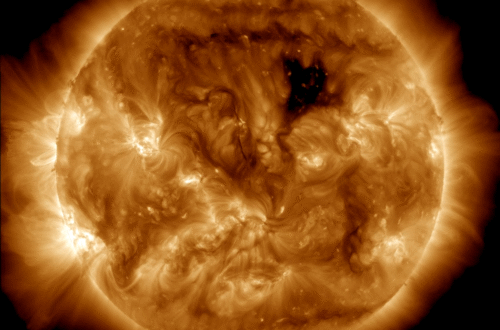
The northern lights, or aurora borealis, originate from the sun. The sun is not a solid object. It is a dynamic sphere of energy. At its core, high-pressure fuses hydrogen into helium, generating convection cells of electrically charged gas. These cells create magnetic loops that erupt from the sun’s surface, releasing plasma during strong solar storms.
Traveling at approximately 18 million kilometers per hour, this plasma arrives at Earth in roughly 18 hours. While our planet’s magnetic field deflects the majority, some is directed towards the polar regions. This occurs where the magnetic protection is weakest, resulting in the formation of auroras. During daylight hours, the presence of sunlight obscures these phenomena. Nevertheless, at night, the plasma recoils like a stretched elastic band. It interacts with oxygen and nitrogen in the upper atmosphere. These interactions release energy in the form of colored light, creating the stunning visual displays characteristic of auroras.
- 💚 Yellow-green from oxygen at ~150 miles altitude
- ❤️ Red from oxygen above ~600 miles
- 💙 Blue from nitrogen at ~60 miles
Each aurora is a glowing reaction to solar energy meeting Earth’s atmosphere.
What’s the Difference Between a Solar Flare, Coronal Hole, and CME?
| Term | Description | Impact |
|---|---|---|
| 🌞 Solar Flare | Quick burst of X-rays and radiation | Short-lived, can disrupt electronics |
| 🕳️ Coronal Hole | Weak magnetic field region letting plasma escape | Predictable, slow aurora build-up |
| 💥 Coronal Mass Ejection (CME) | Explosion of plasma from the sun’s magnetic field | Strong, fast aurora events |
Coronal holes and coronal mass ejections (CMEs) can occur at the same time. NASA estimates this phenomenon is responsible for over 50% of significant aurora events. This concurrence results in exceptionally vivid and striking displays of light in the Earth’s atmosphere.
How Are Solar Storms Classified?
NOAA and NASA classify solar storms using the G-scale. This scale assesses geomagnetic activity from G1 (minor) to G5 (extreme). This classification considers multiple effects. It includes impacts on power grids, disruptions to satellite operations, and the visibility of auroras. Each G-level corresponds to a value on the Kp-index, a planetary scale that monitors geomagnetic intensity.
| G-Level | Description | Kp Index | Frequency | Aurora Visibility |
|---|---|---|---|---|
| G5 🌍 | Extreme | 9 | ~4 per solar cycle | As far south as Florida & Texas |
| G4 ⚠️ | Severe | 8–9− | ~100 per cycle | Alabama, northern California |
| G3 🔧 | Strong | 7 | ~200 per cycle | Illinois, Oregon |
| G2 🛰️ | Moderate | 6 | ~600 per cycle | New York, Idaho |
| G1 🌿 | Minor | 5 | ~1700 per cycle | Northern Michigan, Maine |
A solar cycle lasts approximately 11 years. During this period, various storm levels occur with specific frequencies. Stronger solar storms result in more intense and expansive auroras, as well as increased risks to technological systems.
Can Solar Storms Hurt Us?
A typical solar storm poses minimal risk to human safety. Yet, it can disrupt satellites, power grids, radio communications, GPS, and internet services. Organizations are generally well-prepared, as the NOAA issues prompt updates and warnings during significant storms. While this preparedness is usually adequate, smaller storms with intense electromagnetic energy can still cause disturbances.
Super storms, especially solar flares, are a growing concern. On July 23, 2017, an X-class 5 solar flare occurred but was fortunately directed away from Earth, avoiding potential damage. These powerful flares, referred to as “kill shots,” can have significant impacts, though direct hits from such storms are rare. While researchers are working to forecast damages and reduce risks, our technological defenses are not foolproof. Experts warn that we will eventually face an event akin to the Carrington Event. Such an occurrence can severely disrupt our infrastructure. It will plunge society back into a pre-electronic age. Although we have the knowledge to rebuild, the recovery process would be lengthy and lead to widespread economic turmoil.
Why Northern Lights Look Different to the Eye vs. Camera?
Our eyes rely on two types of cells—cones and rods—located in the retina. Cones, concentrated at the center, detect bright light and vivid colors, but struggle with faint light. Rods, found around the periphery, handle low light but only perceive shades of gray.
That’s why, under dark skies, everything appears muted. Auroras often look like pale, wispy clouds to the naked eye. This is especially true during low activity (below KP5). Cameras, nevertheless, aren’t limited by these biology quirks. They can absorb light over time and reveal the full spectrum of colors hidden in the aurora’s glow.
Bottom line: To truly experience the magic, bring a camera along. It sees what our eyes can’t.his is why to really enjoy the northern lights, it is best to do it with a camera.
What Do You Need to Capture the Aurora?
Occasional storms are bright enough to see with the naked eye. Nonetheless, most aurora events—especially those below Kp 5—need a camera to reveal their true colors. To photograph auroras successfully, you’ll need:
- A modern camera (less than 5 years old) with high ISO ability—ideally above ISO 12,500. Older models can struggle with low light and produce grainy images.
- A full-frame sensor is preferable over a crop sensor; larger pixels gather more light, improving image quality.
- A fast, wide-angle lens, ideally 24mm or wider with an f-stop below f/3.5. The lower the f-stop, the more light you’ll collect.
- A sturdy tripod and remote trigger or intervalometer to keep the camera stable during long exposures.
- And above all—patience and persistence. Chasing auroras is called “hunting” for a reason. They’re elusive, but the reward is spectacular.
Where to Look for Auroras?
To see the northern lights, always start by facing north. Find a location with minimal light pollution. Fields, lake shores, hilltops, and remote parks are great options. Please avoid parking on roadways and do not trespass on private property without permission.
📍Shorelines often offer wide-open views and darker conditions, making them excellent choices. Stick to public spaces like state and federal parks, and always check posted hours and rules. If you must use private property, make sure you have proper permission to be there. Wise to have permission in writing.
What Apps Should I Use for Aurora Chasing?
There’s no perfect app—but several great ones to help track auroras on the go. Popular options include:
- Aurora Alert
- Northern Eye Aurora
- Aurora Forecast
- Aurora Notifier
- Aurora
These apps vary in accuracy and features, so personal preference plays a big role. Crashes can occur during peak aurora activity, so it’s smart to use more than one. You can also just bookmark spaceweatherlive.com to your phone home page, it will have all the information you need to predict aurora activity. Except for cloud cover and smoke plumes.
What to Look For:
- Real-time KP alerts — set notifications for when KP hits your target threshold.
- Forecast tools and Real time data showing KP now, in an hour, and four hours out.
- Solar data including:
- Wind speed (ACE): 600+ km/sec is promising
- Proton density: higher values = brighter auroras
- IMF (magnetic field strength): above 9 is ideal
- Bz angle: a negative Bz means auroras are visible in the Northern Hemisphere
Think of Bz like magnetic poles on a bar magnet. When Earth’s field aligns just right, charged particles slip through at the poles. If the BZ is positive, it will hit the south. Conversely, if the BZ is negative, it will hit north. At least until we have gone through magnetic pole reversal, and this will then be opposite.
⚠️ These metrics aren’t absolute—sometimes a strong solar wind compensates for a low Bz or weaker proton density. The best way to learn? Go outside, take notes, shoot photos, and track conditions over time.

You May Also Like

Will We See Auroras This Week?

Can Disaster Happen In The Blink Of A Solar Storm?